
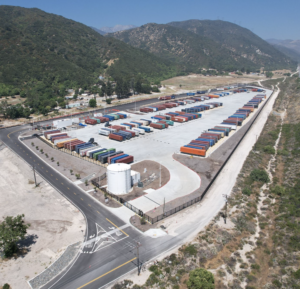
Located at the interchange of the I-15 and I-215, just south of the Cajon Pass, Glen Helen I & II span 55 acres and provide a combined total of 893 truck trailer stalls.
Planning efforts began in mid-2020, positioning the project as an emergency trailer parking solution in response to the surge in container imports during COVID. The facilities were designed to support nearby distribution operations while helping relieve roadway congestion by providing structured staging for containers.
The project reflects a deliberate, phased development approach with strategic due diligence, stakeholder coordination, entitlement alignment, and execution over time.
Temporary Use Permits (to provide immediate relief) → Specific Plan Amendment (to align use and operations with long-term land use planning) → Use Permit (to establish permanence).
Key challenges addressed included CEQA and traffic compliance, offsite easements and agreements with multiple parties, limited infrastructure (served by onsite well water and septic systems), and the implementation of creative solutions to meet WQMP and hydrology compliance requirements.
An amazing experience with many lessons learned along the way.
Located at the interchange of Interstate 15 and Interstate 215, just south of the Cajon Pass, Glen Helen I & II span 55 acres and provide a combined total of 893 truck-trailer stalls.
Planning for the project began in mid-2020 in response to the unprecedented surge in container imports during the COVID-19 pandemic, positioning the facilities as an emergency trailer parking solution to support regional supply chain operations. Designed to serve nearby distribution centers, the project also helped alleviate roadway congestion by creating organized staging areas for container storage and trailer parking.
The project represents a strategic, phased development approach that required extensive due diligence, stakeholder coordination, entitlement strategy, and long-term execution:
- Temporary Use Permits to provide immediate operational relief
- Specific Plan Amendment to align the use with long-term land use objectives
- Use Permit to establish permanent operations
Key challenges included CEQA and traffic compliance, coordination of offsite easements and multi-party agreements, limited infrastructure availability due to reliance on onsite well water and septic systems, and the development of innovative solutions to satisfy WQMP and hydrology requirements.
The project was both a rewarding and complex experience that provided valuable lessons throughout every phase of planning, entitlement, and implementation.